EcoClimate AI Lab | Yuan Lab
Welcome to EcoClimate AI Lab!
📢📢We are recruiting Ph.D. students (start in 2027)! If you are interested in joining us, please click here for details, and contact Dr. Kunxiaojia (Tammy) Yuan at kyuan@central.uh.edu with your CV, transcript, and a brief statement of your research experience and interests.
About the Lab
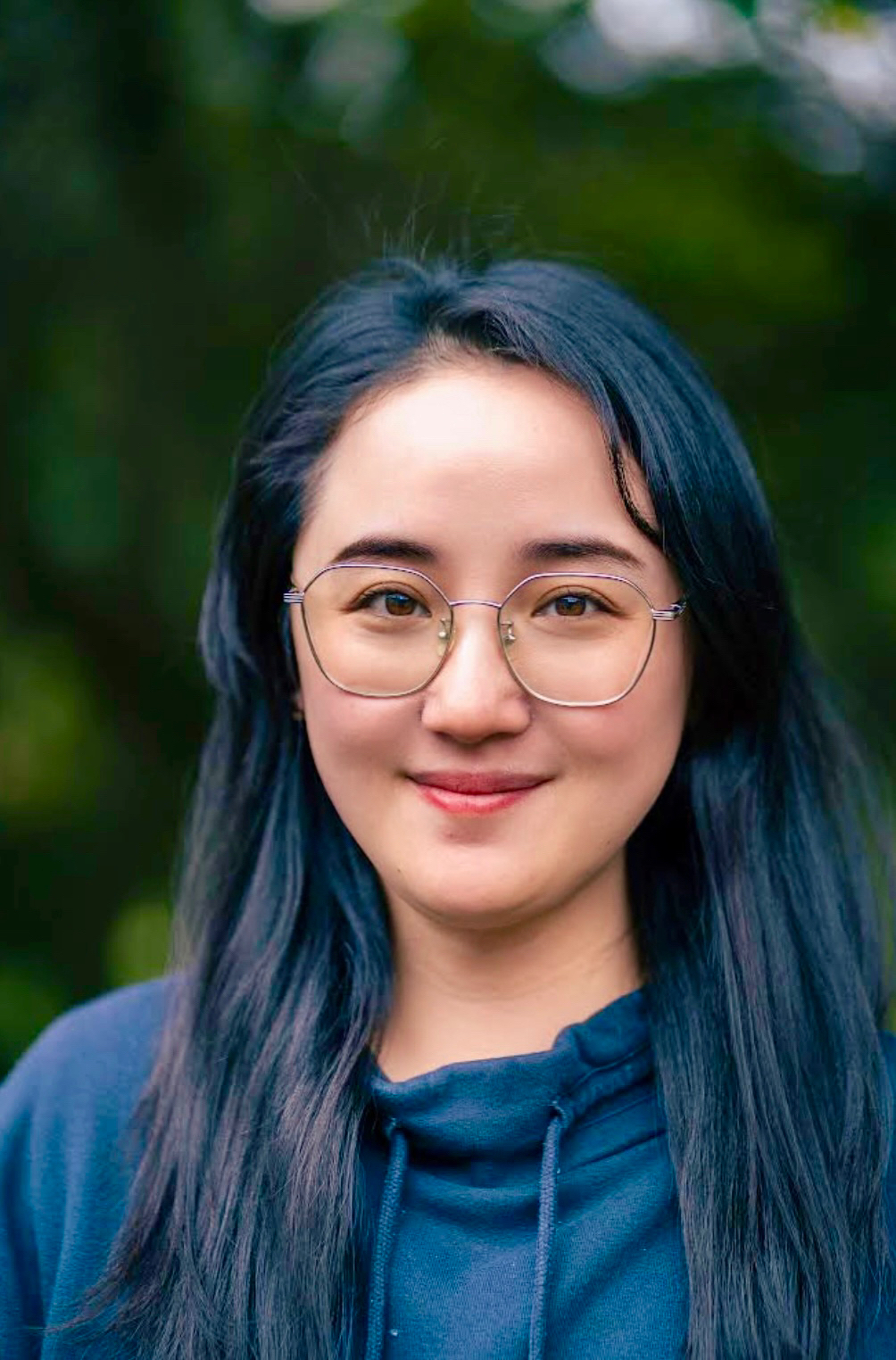
EcoClimate AI Lab is led by Dr. Kunxiaojia (Tammy) Yuan, who is an Assistant Professor in the Department of Earth and Atmospheric Sciences, at University of Houston. Previously, Tammy was a postdoc at the Earth & Environmental Sciences Area, Lawrence Berkeley National Laboratory.
We study how ecosystems respond to climate dynamics and disturbances (e.g., wildfire, deforestation, flooding) through carbon-water-energy nexus, with a particular focus on wetland and forest ecosystems. Our goal is to assess ecological and climate risks, and advance nature-based solutions to enhance ecosystem service benefits. To achieve this, we use a range of tools, including advanced machine and deep learning, causal inference, Earth system models, remote sensing, and field measurements (e.g., eddy covariance, chambers, and isotopes).
news
| Aug 2026 | Had a great time sharing our work on AI for wildfire modeling at this year’s EAS Faculty Lightning Talk, and was pleasantly surprised to take home the stuffed Shasta, UH’s cougar mascot, for first place! 🐾🔥 |
|---|---|
| Aug 2026 | Xiaofan Shen and Jasmine Miao have joined our lab as Ph.D. students. Welcome to the team! |
| Mar 2026 | Our paper, “The underappreciated importance of small wetlands in global methane emissions” has been published in Nature Climate Change. |
| Mar 2026 | Our paper “Why methane surged in the atmosphere during the early 2020s” has been published in Science, which is reported by 70+ news outlets. |
| Mar 2026 | Excited to share that our proposal has been funded by UH Energy Transition Institute (supported by Shell Inc.) !🎉 This project will integrate multi-modal observations (such as UAV, isotope, and ground-based measurements) to better understand methane emissions across diverse sources in Houston. Looking forward to the upcoming field campaigns! |
| Dec 2025 | Fantastic journey at AGU! Really enjoyed organizing sessions, giving presentations, reconnecting with old friends, and meeting new ones. The wetland field trip in New Orleans was especially fun and inspiring. |
| Nov 2025 | Great to attend the workshop “Uniting modelers, microbiologists, and biogeochemists to improve wetland methane prediction” at The Ohio State University. It was inspiring to engage in cross-disciplinary discussions and exchange ideas on improving our understanding of wetland methane processes and advancing next-generation models. |
| Oct 2025 | Presented our work at the “AI for Natural Methane” Workshop at ESILL (Boulder, CO). Wonderful to catch up with old and new friends, and excited to visit the INSTAAR Stable Isotope Lab! |
| Sep 2025 | Our paper “Hysteretic temperature sensitivity in wetland CH₄ emission modeling” has been published in Agricultural and Forest Meteorology. Congratulations to first author Shuo Chen, whom I supervised through the student intern program at Lawrence Berkeley National Laboratory (LBNL). This study is one of the outcomes of that program. |
| Aug 2025 | The workshop we organized, “Bridging the Gap – Flux Data Meets Land Surface Models”was successfully held on August 6–8, Berkeley. |
| Feb 2025 | Our new paper “Exacerbating risk in human-ignited large fires over western United States due to lower flammability thresholds and greenhouse gas emissions” is published in PNAS Nexus. |
| Feb 2025 | Thrilled to share our team’s new paper, “Advancements and opportunities to improve bottom–up estimates of global wetland methane emissions”, published in Environmental Research Letters. |
| Jan 2025 | Excited to share our proposal to FLUXNET Coordination Project (NSF supported) was accepted! Great team work! Looking forward to our upcoming workshop this summer! |
| Dec 2024 | Honored to host our AGU session “The Global Methane Budget and Advancing Understanding of Wetland Greenhouse Gas Emissions”. A heartfelt thank you to all attendees and supporters! |
| Oct 2024 | Our paper, “Projecting Large Fires in the Western US With an Interpretable and Accurate Hybrid Machine Learning Method”, was published in Earth’s Future. |
| Sep 2024 | Honored to host the AmeriFlux Early Career Workshop. |
| Jul 2024 | Delivered an invited talk on regional and global wetland methane upscaling at the AmeriFlux workshop: Remote Sensing and Fluxes Upscaling for Real-world Impact. |
| Jul 2024 | Welcome our new team members: Shou Chen (Purdue University), Benjamin Yan (Stanford University), and Victor Chen (Stanford University). Excited to mentor their summer intern projects!   |
| May 2024 | Presented findings from our Boreal-Arctic wetland study at the NOAA GML Annual Meeting. |
| May 2024 | Presented our work on physically interpretable machine learning for methane studies as an invited speaker at Methane Emissions Technology Alliance, Stanford University. |