Human-induced GHG emissions
We integrate multi-modal observations to better understand human-induced GHG emissions across diverse sources.
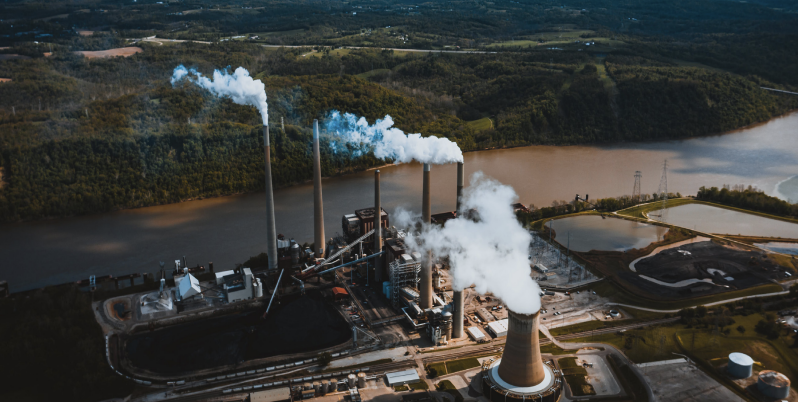
Anthropogenic greenhouse gas (GHG) emissions from urban and industrial systems have far-reaching impacts on climate risk, air quality, and human health. Emissions from industrial facilities, oil and gas infrastructure, landfills, and port activities are often spatially heterogeneous, intermittently released, and poorly constrained by existing inventories and bottom-up estimates. These challenges are further compounded by limited observational coverage and the difficulty of attributing emissions to specific sources across complex, co-located systems. In addition, methane emissions are often co-released with other hazardous air pollutants, further amplifying their environmental and societal impacts, and can also pose safety risks, including explosion hazards, in industrial environments.
Our research seeks to advance understanding of anthropogenic GHG emissions by integrating multi-sourced measurements, including UAV-based observations, isotopic analysis, in situ surface measurements, and satellite remote sensing, with advanced modeling frameworks. This integrated approach enables improved quantification, source attribution, and process-level understanding of emissions across diverse urban and industrial environments.
One of our ongoing projects focuses on human-induced methane emissions in the Houston region has been funded by the UH Energy Transition Institute (supported by Shell Inc.). This work aims to provide new insights into emission patterns, identify key sources and uncertainties, and develop actionable strategies for monitoring and mitigating emissions in complex human systems.